Overcoming emotional and situational barriers to HIV testing
The process for getting an HIV test varies from place to place. Home tests are available in some locations, but aren’t always available to all. In some places, getting a small blood sample still requires an in-person appointment. We’re building a new digital service, initially available in the NHS App, designed to make the home test more accessible and less intimidating.
Note: Impact
Once fully rolled out, we expect this home testing service to simplify HIV testing, increase equity, reduce stigma, and provide more useful data to local health providers.
HIV is a virus that spreads via sexual contact without a condom, or by sharing needles. With early diagnosis and appropriate treatment, people living with HIV can live long, healthy lives without passing the virus on to anyone else.
The government’s goal is to end new HIV transmissions by 2030. To bring that about, the NHS must provide testing services for people who may have been exposed to the virus - an essential step towards early diagnosis.
Testing isn’t standardised. Anyone can ask for a test, and most tests happen in local sexual health clinics - but those clinics aren’t always easy to find on the internet. They usually have their own independent websites, which may or may not come up when someone goes searching for their nearest testing location. If and when someone does find somewhere to get tested, they give a small sample of blood or saliva, which is sent off to a laboratory. Results come back a few days later.
Now, we are building a new home testing service for HIV. Our goal is to make it available nationally via the NHS App, by the end of 2026. It will allow at-risk people to order a test, get results securely, and contact their GP or sexual health clinic, entirely within the NHS App.
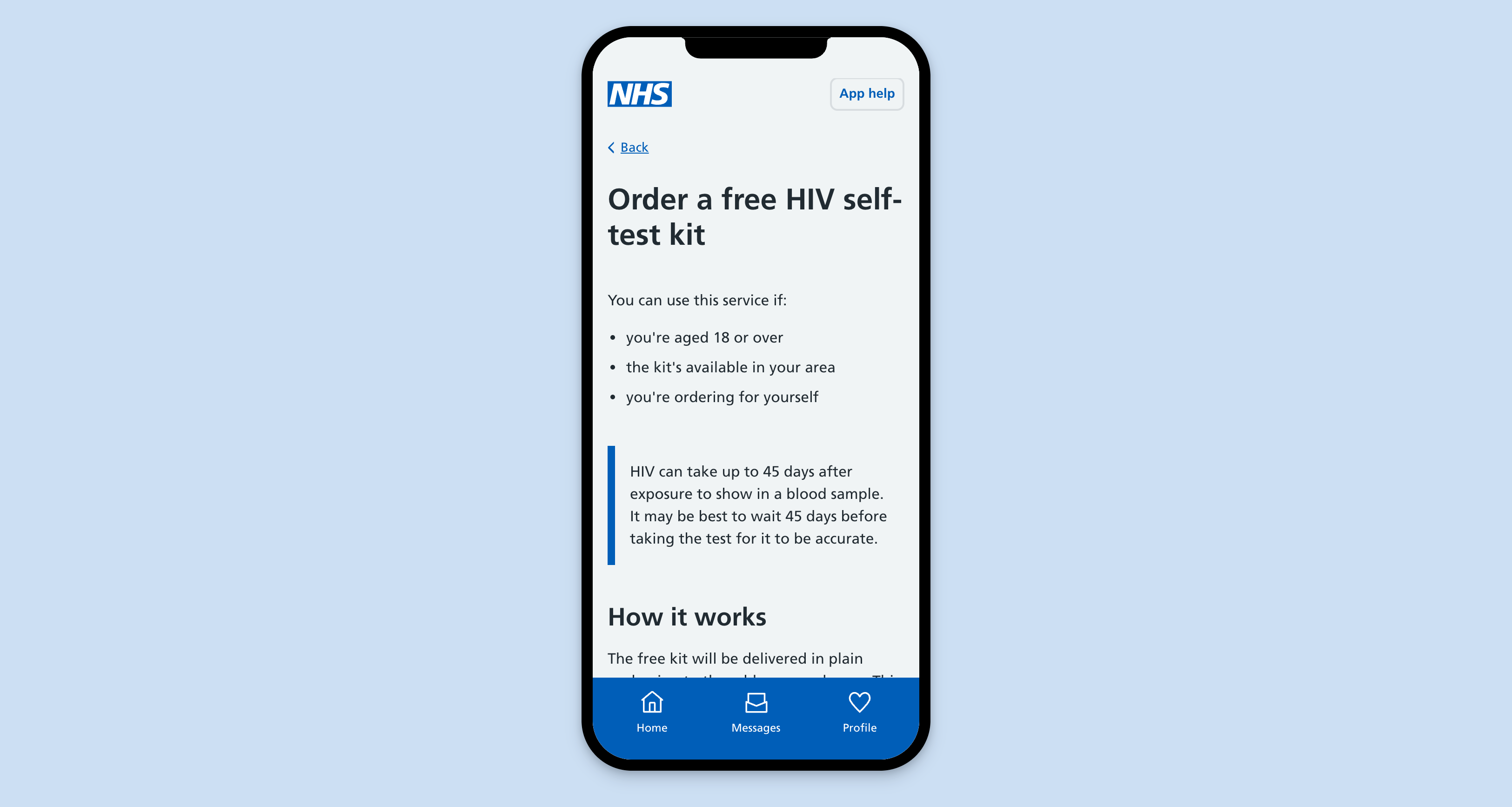
We believe this service will bring about:
- earlier diagnosis, and treatment where necessary
- reduced pressure on existing NHS sexual health services
- more privacy and reduced stigma for people seeking a test, and waiting for results
- improved equity and access (eg, making testing easier to access for people who live in rural areas, far from a sexual health clinic)
How it works
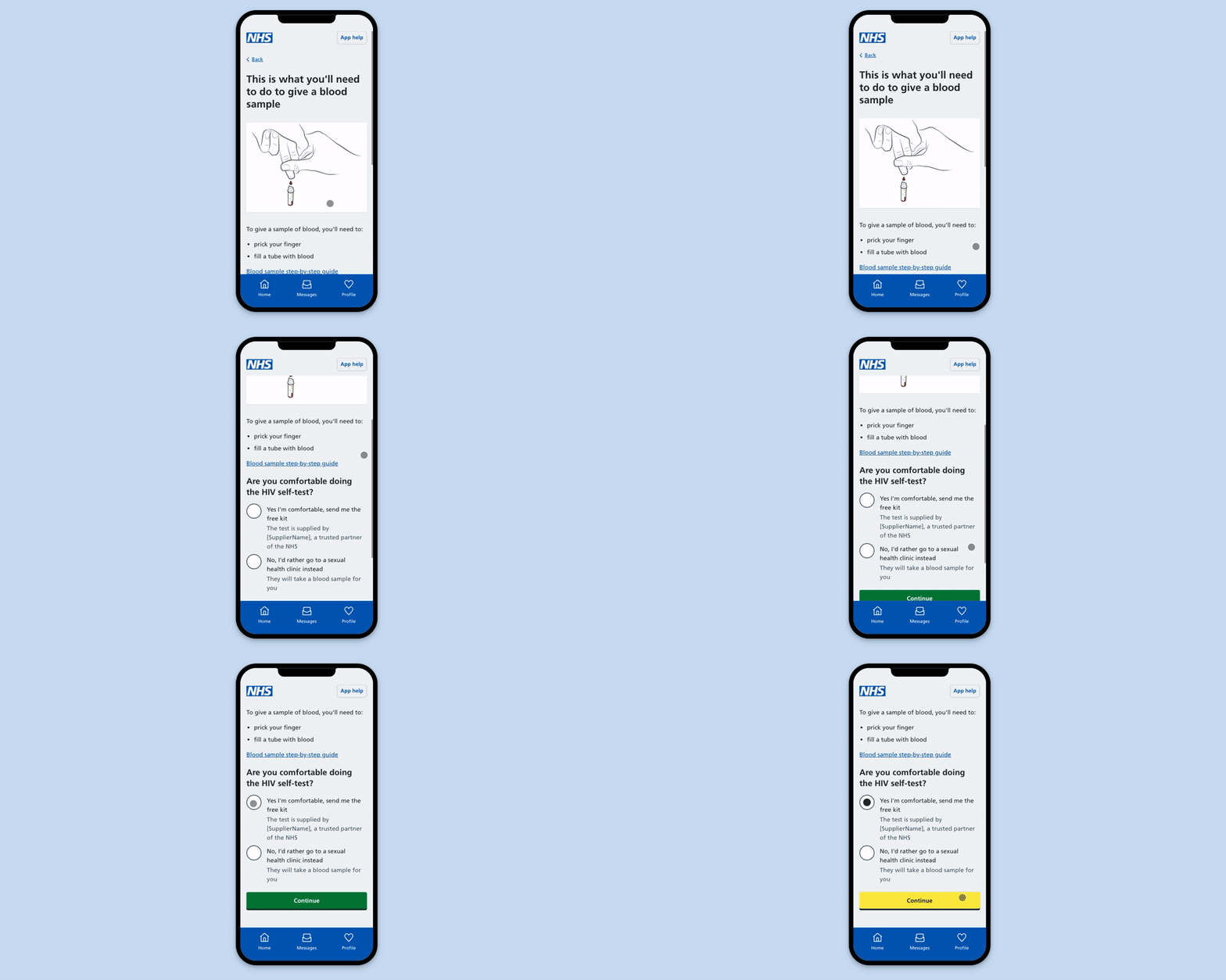
- Users access the service via the NHS App, or following instructions from a trusted campaign (for example: using a QR code)
- Users are given clear information about privacy, data use, and possible alternatives
- They complete a short questionnaire, designed to ask as few questions as possible
- Users are shown what the home test entails, and asked to confirm that they want to continue
- A test kit is sent out in the post
- Users complete the test by collecting a sample, then return it by post
- Results are communicated securely via the NHS App, within a few days. Reactive results are passed on to relevant local teams via existing clinical pathways
What we learned while designing this service
Barriers to testing are often emotional and situational, rather than technical.
Some people are more confident than others about taking a sample of their own blood. What’s more, beyond confidence, the process requires some dexterity, so isn’t suitable for everyone. It’s important to check this with users early on, before they order a kit.
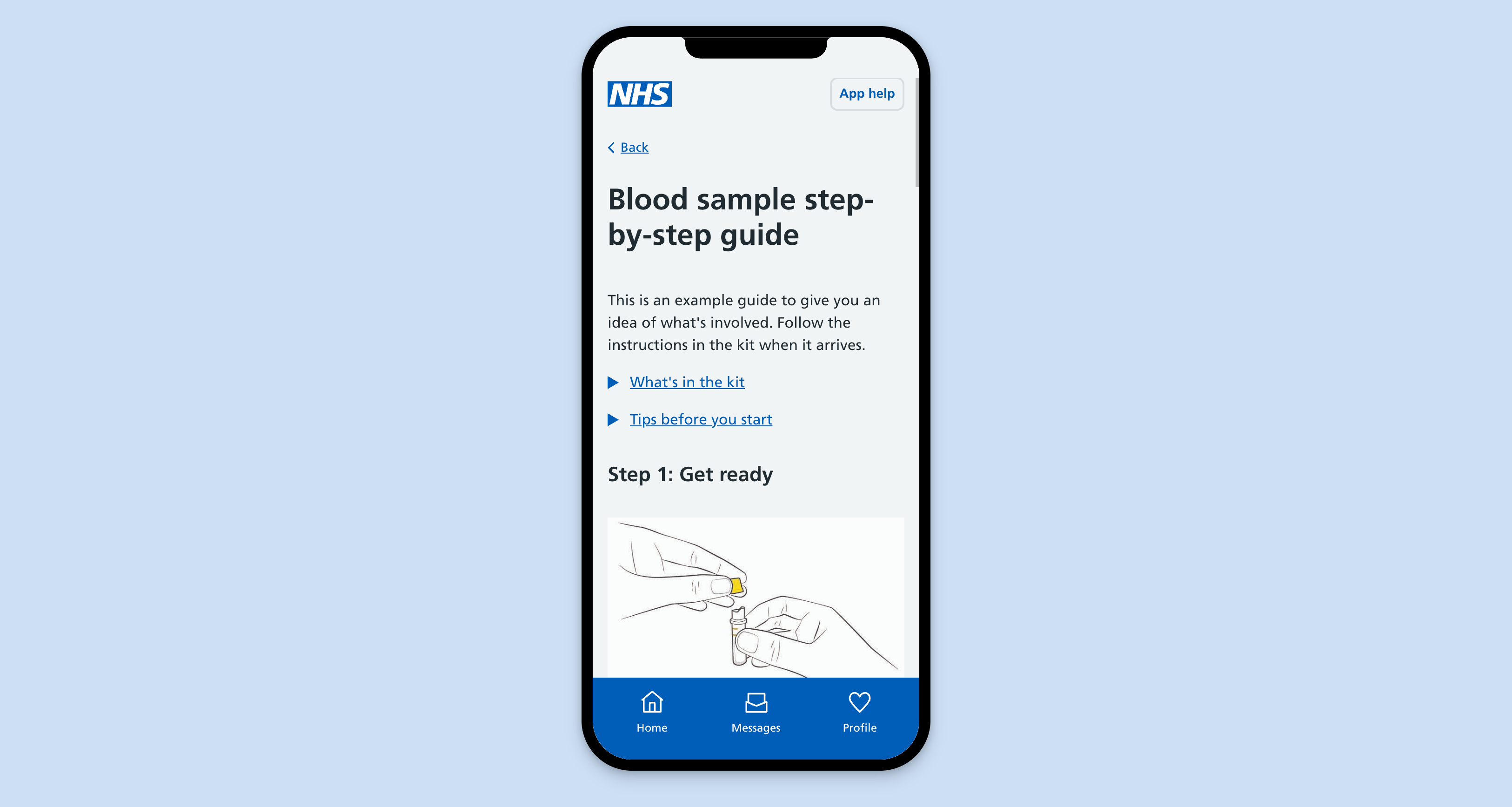
Knowing what’s involved from the start helps more users feel more comfortable. Users who are uncomfortable can choose not to order a home test kit, and attend a clinic instead.
In research with users, one person said:
Visually, it just shows you how easy it is. Because you have the picture which shows the contents, which is nice.
Another person said:
This is all very nice and clear. Nice clear diagrams. They’re not overcomplicated and they’re easy to understand.
Research also uncovered barriers to ordering and completing a home test, including privacy, trust, language and accessibility - so we’ve made sure we mitigate them by designing the service around user needs.
| Barriers such as… | The NHS mitigates by… |
|---|---|
| Shame and stigma surrounding HIV |
|
| People don’t know that home testing exists |
|
| Some people find test kit instructions hard to follow |
|
As with all our services, accessibility is vitally important. The service design was informed by research with people who have access needs, including non-native English speakers, and people who have varying amounts of previous experience with being tested for HIV (from people who have never been tested, to others who have been tested many times).
What this means for ICBs, regions, and local authorities
This home test service provides a national capability, as it’s a postal service, but allows for local control of targeting - ie. the NHS can switch it on anywhere, based on the needs of local health teams.
We believe this service will help local service providers:
- reach more people who do not routinely attend sexual health clinics
- complement existing locally commissioned services - more home testing should result in increased test capacity, fewer avoidable routine appointments, and better visibility of both demand and outcomes
- avoid a 10-15 minute phlebotomy appointment for every returned test kit (a working assumption we used during early prototyping)
Studies show that about one third of the population do not access health services online, so it’s essential that any digital route also has a non-digital option (in this case: direct delivery to home, or access to a clinic for in-person testing). In future, there is scope for providing this service via other digital channels (eg, nhs.uk).